Hecate, the Greek Goddess of the crossroads & boundaries, night, light, magic, witchcraft and the Moon.
“Thanks to her association with boundaries and the liminal spaces between worlds, Hecate is also recognized as a chthonic (underworld) goddess. As the holder of the keys that can unlock the gates between realms, she can unlock the gates of death, as described in a 3rd-century BCE poem by Theocritus. In the 1st century CE, Virgil described the entrance to hell as "Hecate's Grove", though he says that Hecate is equally "powerful in Heaven and Hell." The Greek Magical Papyri describe Hecate as the holder of the keys to Tartarus. Like Hermes, Hecate takes on the role of guardian not just of roads, but of all journeys, including the journey to the afterlife. In art and myth, she is shown, along with Hermes, guiding Persephone back from the underworld with her torches.
By the 5th century BCE, Hecate had come to be strongly associated with ghosts, possibly due to conflation with the Thessalian goddess Enodia (meaning "traveller"), who travelled the earth with a retinue of ghosts and was depicted on coinage wearing a leafy crown and holding torches, iconography strongly associated with Hecate.”
Freyja, the Norse Goddess of love, beauty, fertility, war, gold, and seiðr (magic for seeing and influencing the future).
“Freyja also functions as a soul guide and psychopomp, a deity who guides the souls of the deceased to the afterlife. In this function, she is closely associated with the concept of death and rebirth. Her ability to travel between worlds makes her an important figure in rituals and ceremonies dealing with death and transformation.”
Eros & Psyche, in the Jungian tradition: a foundational allegory for individuation, the transformation of the soul and the integration of ego and self.
The Tarot: The Empress & the High Priestess
The Empress: abundance vs. stagnation; fruitfulness vs. depletion
The High Priestess: Psychic awareness vs. ignored gut warnings; hidden truths vs. hidden secrets
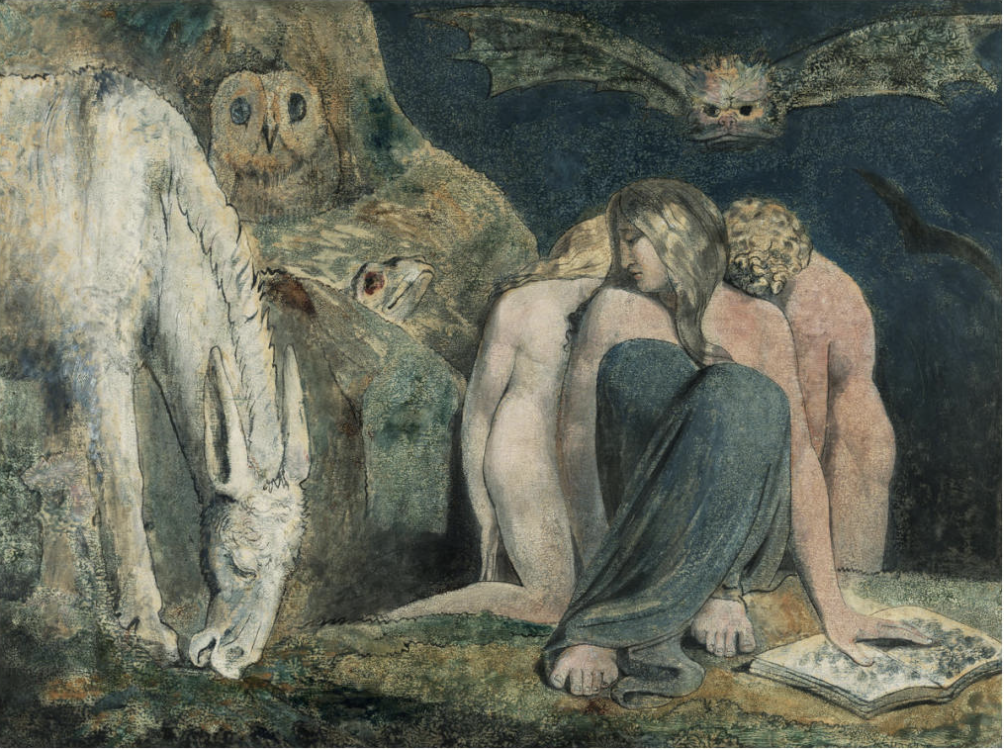
Hecate or the Night of Enitharmon’s Joy by William Blake, 1795